The Days Of Broadcast Digital TV Could Be Numbered
“When the analogue TV signals were turned off in most places around fifteen years ago, their replacement took the form of a set of digital multiplexes. ATSC for North America, and DVB-T for Europe and other places. This would deliver a multichannel broadcasting solution for the future, and this would be how those not on a cable would consume their telly. It’s a surprise then to find that some governments are already looking at turning off digital TV broadcasting, with the UK in particular wanting to put a date on the switch-off of 2032.”
It always seems bad when radio rolls backwards as it is the ideal medium for disasters and emergencies, but despite that, the trend amongst consumers today is less broadcast TV (having migrated to cable TV, Internet streaming, YouTube) and the same often for audio FM broadcast radio (I listen to podcasts in the car and never the radio, whilst others listen to Facebook).
But actually despite that, radio is still actively used across police, emergency services, ambulances, etc for speed and reliability, especially when teams and groups need to coordinate. One could say something like WhatsApp or Zello could be used, but they aren't used as a primary communications tool in these teams. The problem is apart from the Internet going off for any short periods, phones must have data, users must have apps installed, they must have phones available, etc. And everything short range with phones must travel via that app provider and the phone network (data). Disaster events generally also mean congested phone and SMS networks, delaying those mediums of communication.
Radio bypasses all of that. Most radios don't rely on a network (apart from maybe trunk radio), don't rely on data expiring or being bought, they work instantly at the press of a button, and the devices are provided by the employer, which sets the standard for what will be used by all in the team.
It's why, as much as ham radio operators also have lots of digital modes and satellites etc, we still also rely on the faithful fallback of VHF and HF phone radio — it just works across all users everywhere as it is the one thing all operators have, and were licensed to use.
Given Oudtshoorn's (in South Africa) recent 4 to 5 days without power, it is not a given that power will just stay on at all times. In any disaster there is a chance that power as well as the Internet (along with VoIP phones and Microsoft OneDrive) go offline. Disaster and emergency personnel will still be using their radios and keeping essential communications alive as their initial response.
If those radio networks also start to fail due to extended outages, we as ham radio operators will be responsible for re-establishing communications locally and further afield, using our “fallback radios” and our communications savvy to “make it work”.
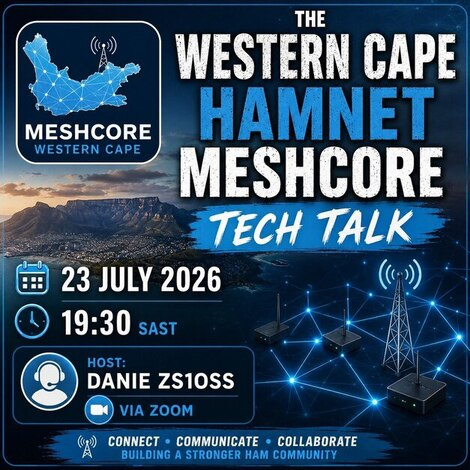
And on the topic of traditional radio, I can say now that Cape Town has over 180 MeshCore radio nodes across the city, and many of them operated by ordinary citizens without any radio knowledge. MeshCore links Cape Town to Worcester in the East, and up to Saldanha and past Piketberg 160 km to the North. It is fostering good relations across suburbs where no-one was even aware of the other person before. This has a backbone of solar-powered repeaters that will survive any extended power outage no matter how long it lasts. It is all pure radio without any Internet required.
When everything else needs a network, radio is the network. Or as HAMNET says: “When all else fails, amateur radio will not fail”.
See
The Days Of Broadcast Digital TV Could Be Numbered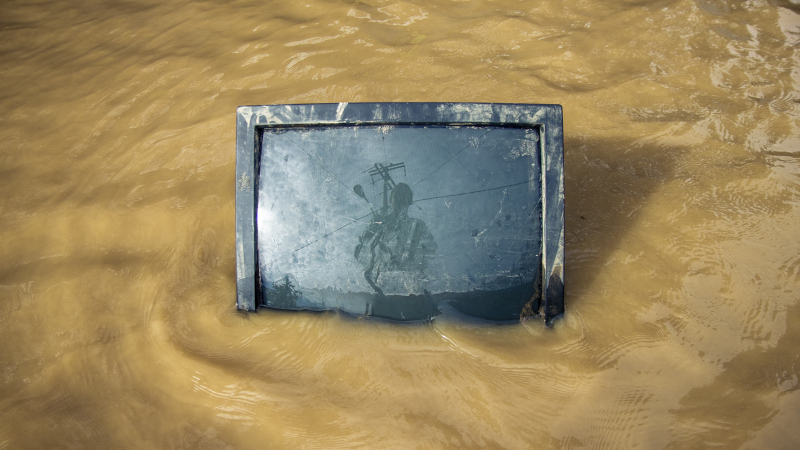
When the analog TV signals were turned off in most places around fifteen years ago, their replacement took the form of a set of digital multiplexes. ATSC for North America, and DVB-T for Europe and…
#technology #radio #disasters
 Like Us
 Support Hubzilla